

Reliable and Affordable Virtual Reality Solutions for Cervical Range of Motion Assessment
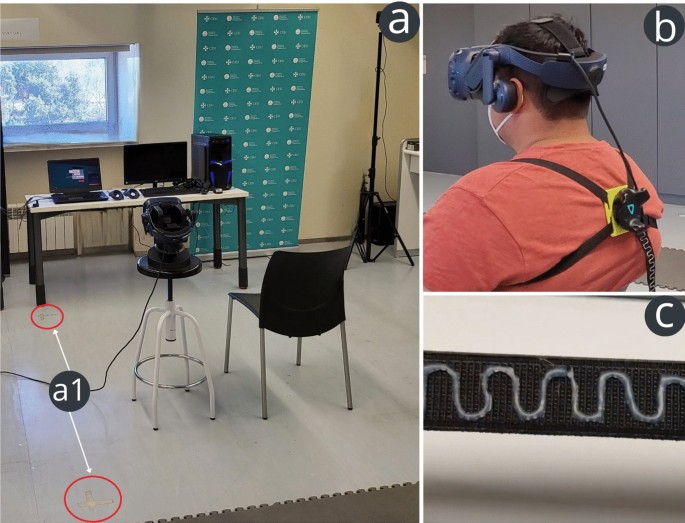
This study, conducted by researchers from the Information Processing and Telecommunications Center (IPTC) at the Universidad Politécnica de Madrid (UPM), evaluates the reliability and usability of virtual reality (VR) technologies for assessing Cervical Range of Motion (CROM), a key metric in the diagnosis and monitoring of neck pain and other musculoskeletal conditions.
The research compares three commercially available VR setups representing different market segments: a high-end system (HTC Vive Pro Eye), a mid-range system (HP Reverb G2), and a low-cost standalone device (Meta Quest 2). Using a custom-developed VR application that simulates a clinical environment and guides users through standardized neck movements, 94 assessment sessions were performed by a single evaluator.
Results demonstrate good to excellent intra-rater reliability across all devices, with Intraclass Correlation Coefficient[1] (ICC) values ranging from 0.81 to 0.96. Importantly, no statistically significant differences were found between high-end and low-cost systems. The findings reveal that headset design, weight, and fit have a greater impact on measurement reliability than tracking technology itself. Usability scores were high for all devices, confirming that VR-based CROM assessment is both reliable and user-friendly.
These results support the use of low-cost VR devices for clinical and remote cervical assessment without compromising accuracy or usability. Potential applications include telerehabilitation, hybrid care models combining in-clinic and at-home therapy, objective monitoring of patient progress, and personalized rehabilitation programs. Overall, this work highlights VR as a scalable, accessible, and cost-effective tool for musculoskeletal assessment and digital health innovation.
Bibliographic reference:
Santos-Paz, J.A., García-Carmona, R., Sánchez-Picot, Á. & Otero, A. Comparative evaluation of virtual reality setups for assessing cervical range of motion: a reliability study. Virtual Reality, 30, art. 35 (2026). https://doi.org/10.1007/s10055-025-01299-7
Rodrigo García Carmona: GS / ORCID / LinkedIn
LinkedIn: https://www.linkedin.com/company/iptc-upm/
For more information: www.iptc.upm.es
[1] The Intraclass Correlation Coefficient (ICC) measures how similar members within groups are, indicating reliability or agreement, with values from 0 (no agreement) to 1 (perfect agreement). It’s used for grouped data (like students in classes, patients in clinics) to assess consistency, often via ANOVA, showing if within-group variance is small compared to between-group variance, helping determine necessary sample sizes in studies like cluster-randomized trials
Share this: